Halo's legacy endures in Destiny, Crysis, and Advanced Warfare—sci-fi shooters that rekindle epic battles and camaraderie.
I still remember the first time I stepped onto Installation 04. The air hummed with ancient mystery, and the weight of a universe balanced on the barrel of my assault rifle. For many of us, Halo wasn’t just a game—it was a second home, a place where friendships were forged in the fires of battle, where our imaginations soared through slipspace. But even the most legendary of rings must eventually fade into memory. So where does a Spartan turn when the fight is done? What worlds dare to echo that same symphony of sci-fi wonder, heart-thumping gunplay, and the quiet moments between the blasts?
Looking back from 2026, I’ve wandered many galaxies in search of that spark. And I’ve found that the spirit of Halo never truly died—it just evolved, spread across a constellation of unforgettable titles. Let me take you on a journey through some of the brightest stars in that constellation.
When the Future Calls: Shooters That Look to Tomorrow
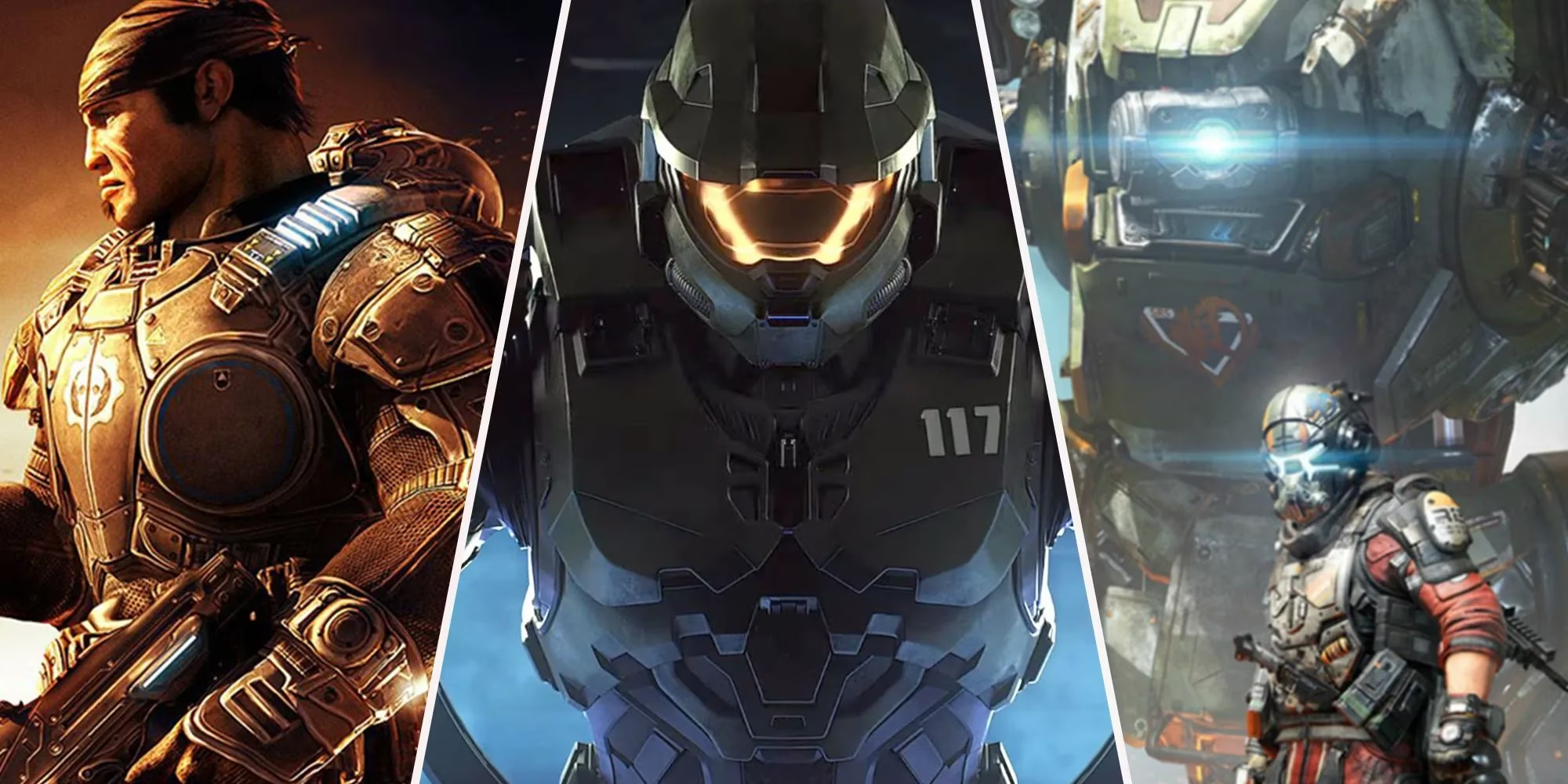
Halo always painted the future in broad, vibrant strokes—alien alliances, ancient superweapons, and the raw beauty of the cosmos. If that’s the canvas you crave, few games answer the call as boldly as the Destiny series. Birthed from the same minds at Bungie, Destiny is like a child who inherited the family business but carved out its own empire. I’ve spent countless hours dancing under the Traveler’s light, chasing exotic loot, and losing myself in a story that stretches across a decade of expansions. It’s a place where the social shooting of Halo’s multiplayer meets a living, breathing galaxy. Have you ever felt the rush of a six-player raid, everyone shouting in unison as the final boss crumbles? That’s the kind of magic Destiny weaves.
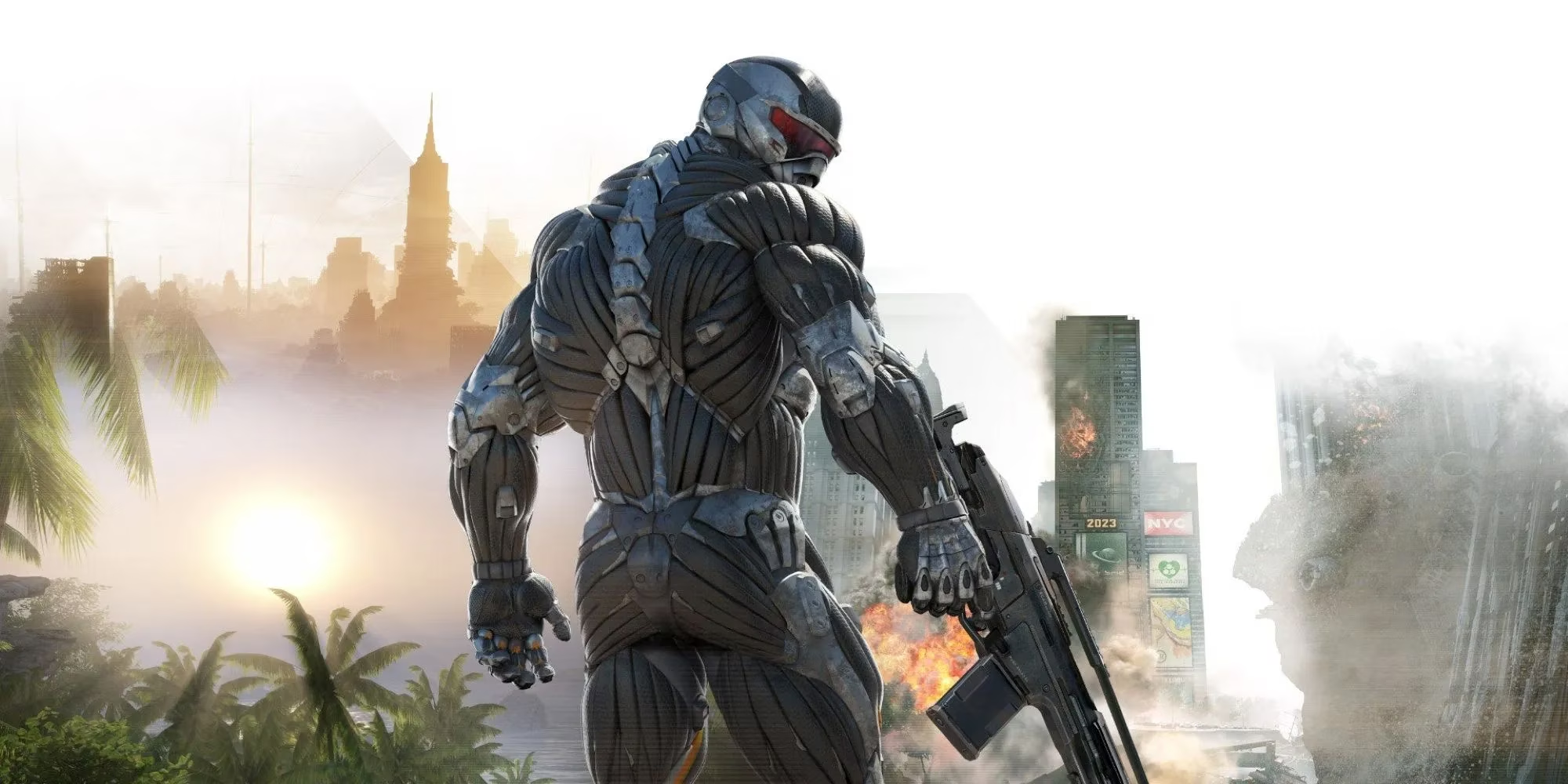
Then there’s Crysis Trilogy. Remember the first time you donned that nanosuit? I sure do. The series feels like Halo’s more technologically grounded cousin—an alien invasion, a supersoldier, and a world that bends to your will. Whether you’re stalking through the open jungles of the first game or riding the cinematic rollercoaster of the third, Crysis always asks: How powerful do you want to feel today? The answer, of course, is always “maximum.”
And let’s not forget Call of Duty: Advanced Warfare. I know, I know—Call of Duty? But hear me out. The series took a sharp turn into the future with this one, and suddenly we had exoskeletons, energy weapons, and vertical movement that felt like a love letter to Halo’s enhanced mobility. It’s a short, explosive affair, but it scratches that itch for high-tech combat without the need for a shield.
The Rhythm of Battle: Where Control Meets Chaos
One thing Halo mastered was the dance of combat—the measured cadence of a plasma burst, the sudden chaos of a stuck grenade, the primal joy of a melee strike. The Doom series understands this on a spiritual level. Whether it’s the classic 1993 original that laid the groundwork or the 2016 reboot that reinvented it, Doom is pure adrenaline. There are no reloads, no aiming down sights—just you, your weapons, and a relentless tide of demons. Isn’t it invigorating to know that the only way out is through, your finger never leaving the trigger? The newer Doom games even sprinkle in a bit of verticality and air control, making you feel like the ultimate demon-slaying Spartan.
But what if I told you the rhythm could be literal? Enter Metal: Hellsinger. This game turns firefights into a deadly concert. You shoot, slash, and explode to the beat of a metal soundtrack that would make any Halo fan’s heart pound with nostalgia—remember those drum sections in the original trilogy’s music? Metal: Hellsinger dials that feeling up to eleven. It’s a rhythm game disguised as an FPS, and it’s absolutely brilliant. Can you keep the beat while hell itself tries to tear you apart? Only one way to find out.
Bound by Fireteam: Stories Best Told Together
Halo’s campaign was never just about the Chief; it was about the bonds we formed along the way. Gears of War is the big brother that traded the helmet for a bandana and a lot of muscle. Yes, it’s third-person, and yes, it’s meatier, but the soul is the same: a gripping sci-fi story built for co-op. I’ve spent nights chainsawing Locust with a friend at my side, and those memories are every bit as precious as any Warthog run. The series’ bombastic charm and desperate last stands are a beacon for anyone who loves a good fight with a good partner.
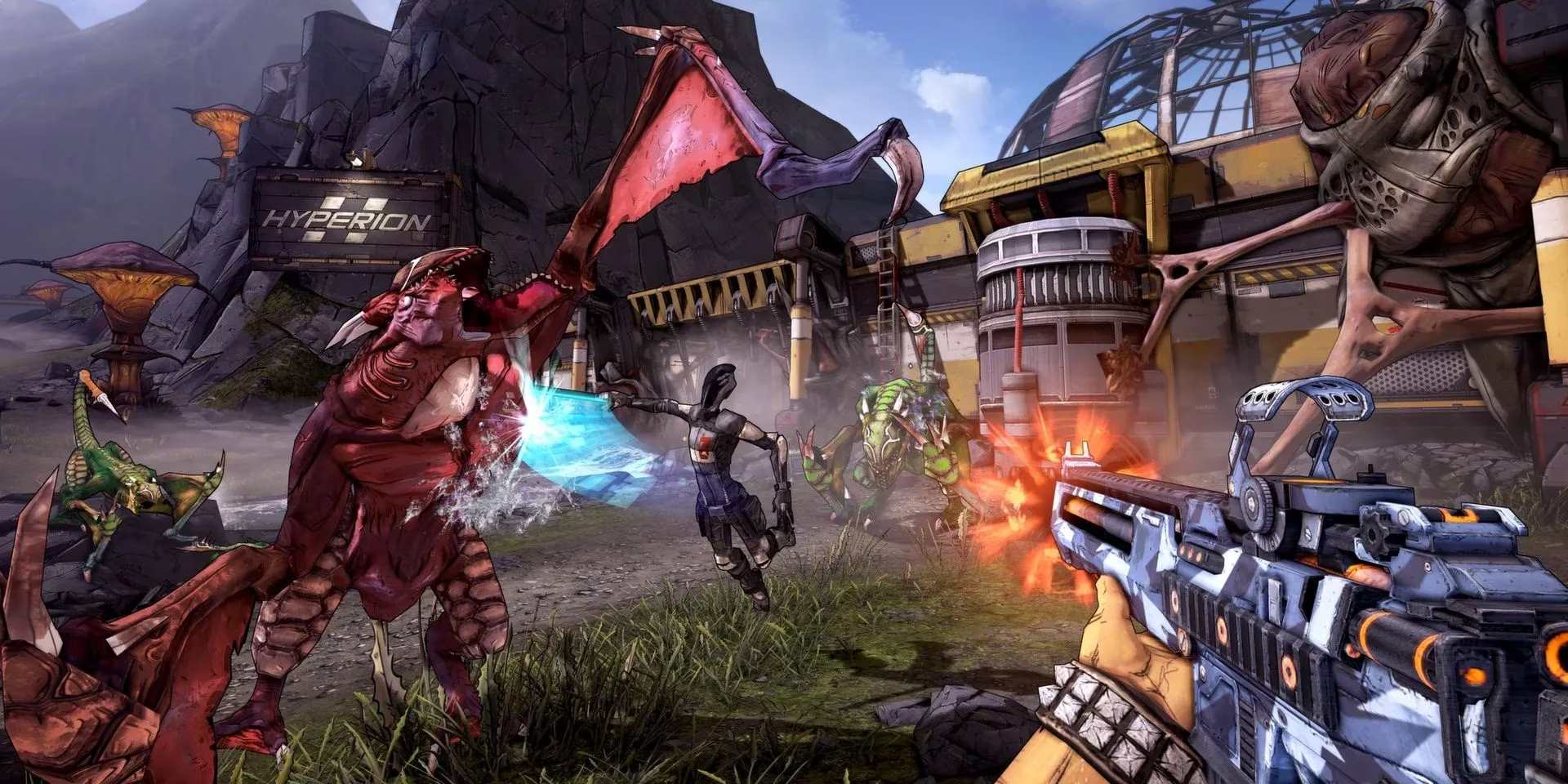
On a slightly more vibrant note, Borderlands 2 offers a different kind of fellowship. It’s Pandora, a planet that feels like a Halo ring gone mad—colorful, chaotic, and crawling with psychos. The gunplay is tight, the loot is endless, and the humor is a welcome twist. You might ask: Can a shooter make me laugh while I’m reloading? Borderlands 2 proves it can. And just like Halo, it’s best enjoyed with a squad, each of you bringing a unique class ability to the slaughter.
Portal Tricks and Old-School Soul
For those who miss the arena-style combat of classic Halo, Splitgate is a revelation. Imagine the tight, floaty gunplay of a Halo match, then add portals—yes, portals you can create and leap through. It’s a tactical sandbox that turns every deathmatch into a mind-bending puzzle. I remember my first flank via a portal on the ceiling; my heart raced like it hadn’t since my Blood Gulch days. How can something so simple feel so revolutionary?
If you’re willing to dive deeper into the old school, the Marathon Trilogy waits for you in the mists of time. This is Bungie before Bungie, a series of text-heavy sci-fi shooters that first toyed with rampancy—an idea that would eventually become Cortana’s crisis. I won’t lie: the graphics are ancient, and you’ll need to navigate community ports to play. But isn’t there something poetic about tracing the lineage of a legend? Marathon is a cathedral of ideas, and every Halo fan should walk its halls at least once.
Mechs, Monsters, and Mayhem
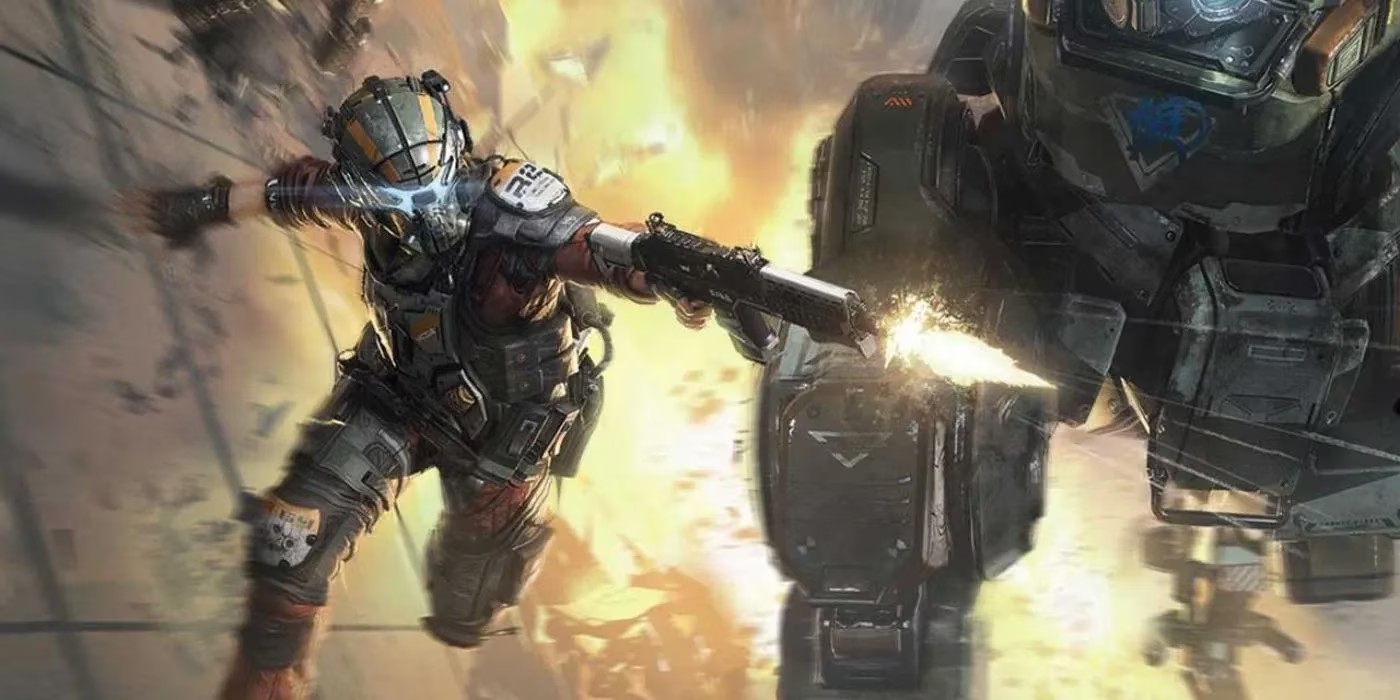
The Halo series gave us Scorpions, Warthogs, and the occasional mech sequence, but some games build their entire identity around piloting giant things. Titanfall 2 is the crown jewel here. The relationship between a Pilot and their Titan mirrors the bond between Chief and Cortana—a silent, powerful protector. The campaign is a masterclass in pacing, and the wall-running, double-jumping movement is so fluid you’ll wonder why all shooters don’t feel this way. I still catch myself humming the BT-7274 theme sometimes.
And then there’s Lost Planet. Capcom’s short-lived series dropped you onto frozen worlds filled with towering Akrid monsters and hulking Vital Suits—mechs that you could customize and fight with. The boss battles are the stuff of legend; I vividly recall a fight against a sandworm the size of a city block, and the sheer scale felt like a Halo vehicle section pushed to its glorious extreme. The third-person shooting was solid, and the alien landscapes were breathtaking. Does a series deserve resurrection just because it dared to be different? I think so.
The Hidden Gems I Discovered
Some of the best recommendations are the ones you stumble upon. Prodeus is a recent gem that harkens back to the pixelated violence of the 90s, but with modern fluidity. The weapon wheel is simple, the pace is frantic, and the level design encourages constant movement—no camping allowed. It’s a love letter to shooters like Halo and Doom, wrapped in a gorgeous retro aesthetic.
On the other side of the platform wars, Resistance 3 still holds a dear place in my heart. It was the swan song of the PlayStation 3 era, a game that traded the military bravado of its predecessors for a desperate, survival-horror road trip. Insomniac crafted an arsenal that would make a UNSC engineer jealous, and the story of Joseph Capelli is as human as any Master Chief journey. Similarly, the Killzone series offered that grand-scale warfare with its own brutal flavor—the Helghast are iconic adversaries, and the multiplayer once rivaled Halo’s in intensity.
And if you’ve never played Project Snowblind, consider this my personal plea. Originally conceived as a Deus Ex spin-off, this forgotten PS2/Xbox shooter gave you bio-augmentations that let you hack turrets and see through walls, mixing strategy into the gunfights. It felt like a glimpse of the future, and in 2026, it’s a retro delight that still feels surprisingly fresh.
What Does the Future Hold?
We’ve traveled from the rings to the stars, through hellscapes and frozen wastes. The beauty of being a Halo fan is that our home game taught us to appreciate a certain flavor of combat, but our palates have only grown. With every passing year, new sequels, reboots, and surprises emerge. The Wolfenstein series keeps reinventing history with brutal, high-velocity stealth-action, while Apex Legends keeps the fires of dynamic team shooting alive in its ever-expanding arena—I still can’t believe I’m gliding down with a squad in a world that started in Titanfall.
So here I stand, in 2026, controller in hand, looking back at all these incredible games that share DNA with Halo. Each one taught me something new, challenged me in different ways, and filled my heart with that same adventurous spark. Are they Halo? No. But in their own universes, they are something just as precious: proof that the spirit of the ring has become a galaxy in itself.
Until the next transmission, keep your shields charged and your aim steady. The universe is infinite, and there’s always another fight worth joining.
Comments