Halo drama at 343 Industries intensifies as the studio shifts from Slipspace to Unreal Engine 5, promising a bold new era for the franchise.
In the grand circus of video game development, few soap operas have been as deliciously messy as the behind-the-scenes drama at 343 Industries. By the time Microsoft\u2019s 10,000-person layoff tsunami crashed into the studio in January 2023, the Halo faithful had already weathered a reality-bending TV show, a tragic split-screen co-op betrayal, and a multiplayer component that bled players faster than a Warthog with no wheels. Then Bloomberg\u2019s Jason Schreier published a report that pulled the curtain back even further, revealing a franchise in full-blown turmoil \u2014 and one juicy detail that still echoes three years later: Halo was finally ditching its homegrown Slipspace engine for Unreal Engine 5.
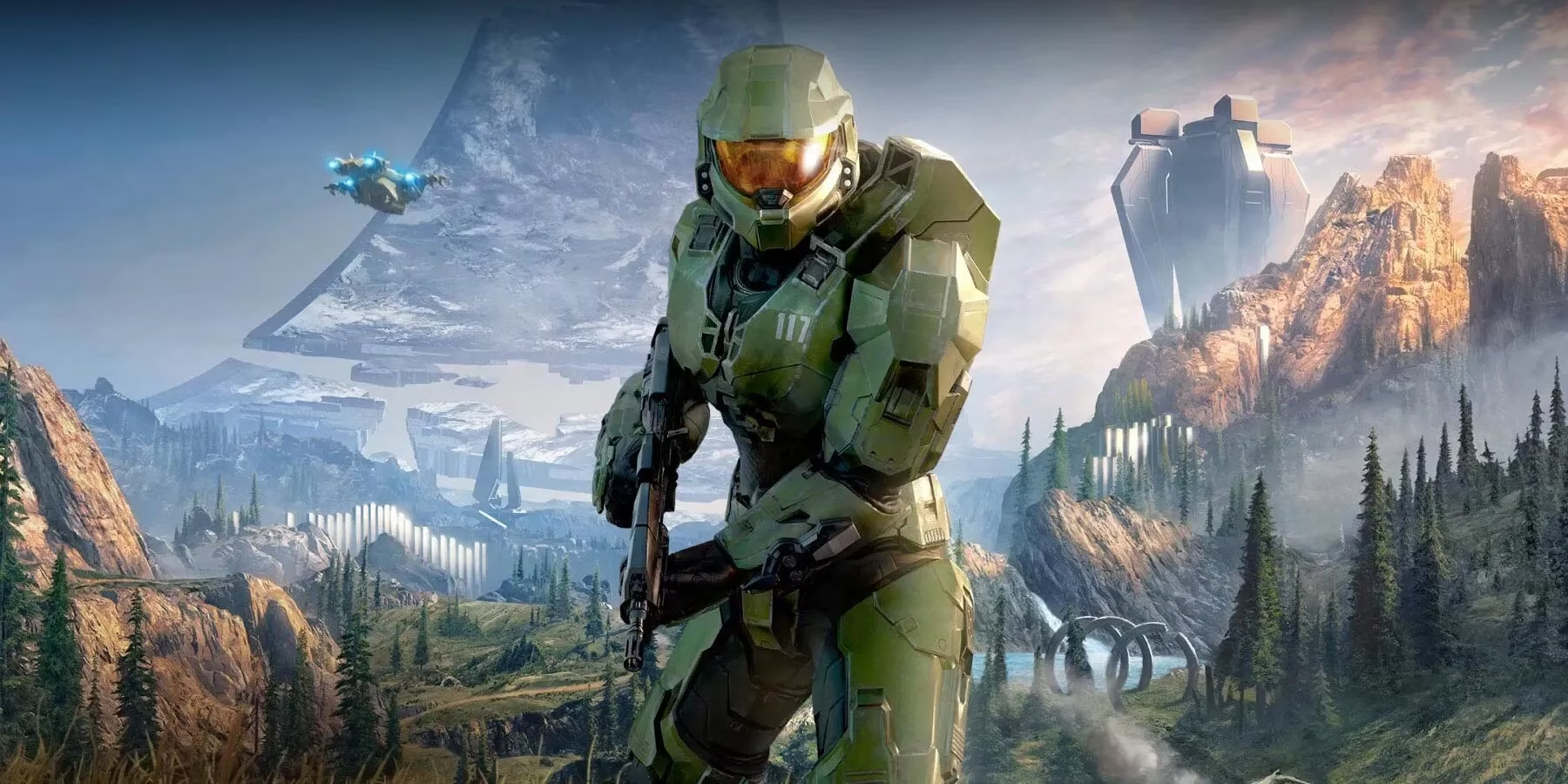
The year 2023 hadn\u2019t even finished its first month before Microsoft strafed its own studios with pink slips. 343 Industries, the handpicked steward of the Halo universe, got hit particularly hard. It wasn\u2019t exactly a surprise. The long-promised couch co-op campaign had been unceremoniously shoved into a cryo pod, never to emerge. The free-to-play multiplayer of Halo Infinite was gasping for updates, with fan forums boiling over with demands for fresh blood at the top. Whispers that other studios might start shouldering Halo development duties grew so loud that Matt Booty, head of Xbox Game Studios, had to step in and publicly swear that 343 would remain \u201cthe primary developer.\u201d Internally, Booty reportedly assured the 343 staff that control of the franchise wouldn\u2019t be outsourced into oblivion \u2014 even as collaborations with outside partners were on the horizon.
The real head-turning revelation, however, was the engine pivot. For a decade, a quiet war had been waged inside the studio: stick with the internally built Slipspace engine or kneel before Epic\u2019s Unreal. The debate only ended when both the studio head and the engine lead changed in late 2022, effectively unlocking the door for Unreal. According to Schreier\u2019s sources, the ancient Slipspace codebase had become a digital ball and chain. Two fan-favorite multiplayer modes \u2014 Extraction and Assault \u2014 sat nearly finished but stubbornly unreleasable because the engine fought every attempt at implementation. Developers reportedly found Slipspace so unwieldy that frustration was a standard part of their daily login bonus.
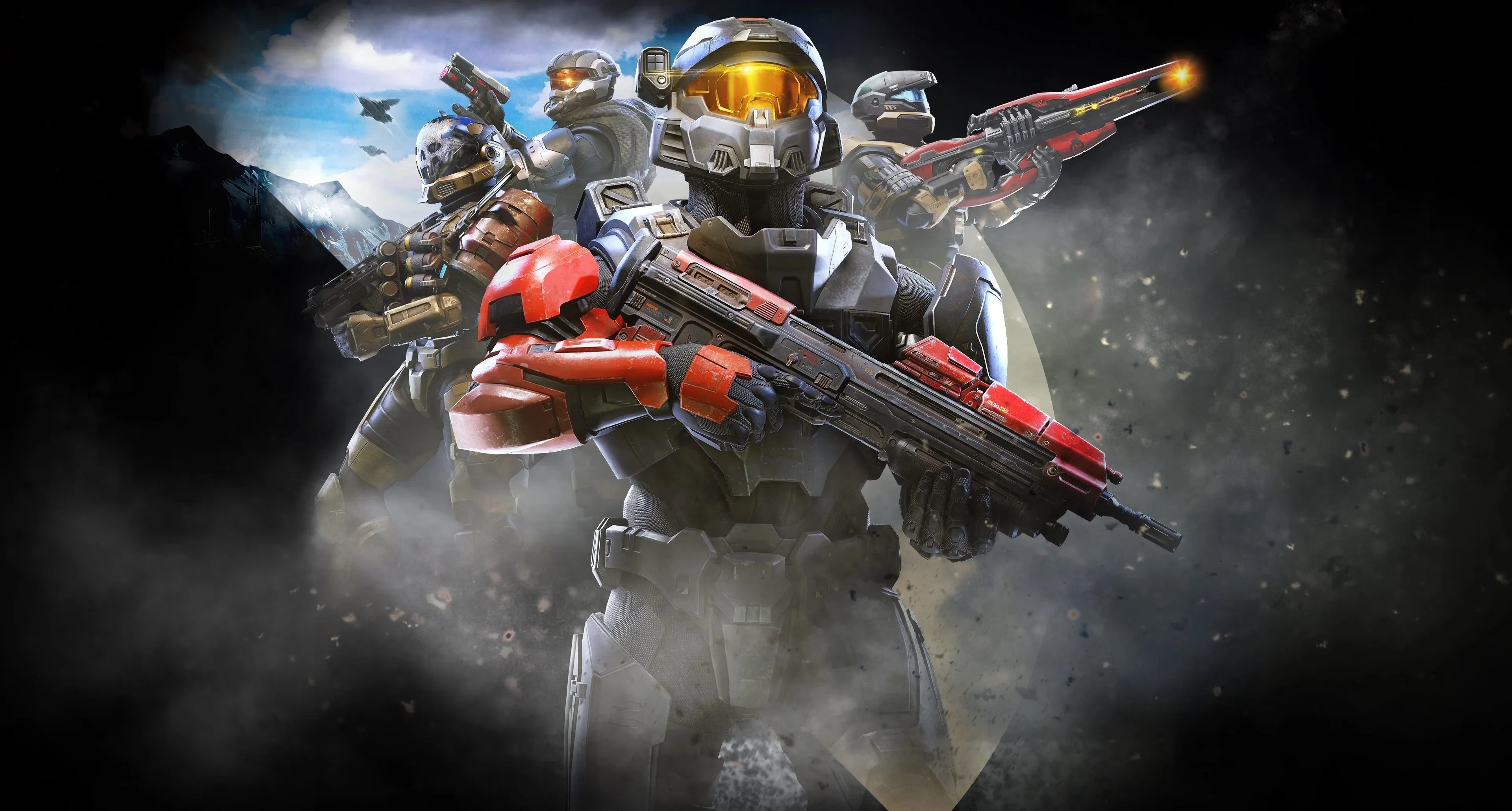
And so, the first Halo project to flaunt Unreal Engine 5\u2019s muscles was born, codenamed Tatanka. 343 Industries tapped Certain Affinity, a studio known for sweating the details on previous Halo outings, to co-develop the title. Initially, Tatanka was pitched as a battle royale, a direct shot at Fortnite\u2019s throne, but the ever-shifting winds of corporate strategy soon left its final genre as uncertain as a Grunt\u2019s aim. While the gaming world\u2019s rumor mill spun with tales of dropped hot-zones and shrinking circles, the developers themselves seemed to be exploring multiple directions, keeping the community in a perpetual state of leaked-screenshot-and-speculation hangover.
Amid all this mechanical upheaval, the report landed one final gut punch for lore lovers: story-driven DLC for Halo Infinite was effectively dead. Any hope that Master Chief\u2019s latest adventure would get the same post-launch narrative treatment as past entries evaporated faster than a plasma grenade\u2019s fuse. For a franchise built on expansive campfires and cryptic Cortana monologues, the silence on the campaign front felt deafening. The engine switch, combined with the multiplayer\u2019s limp performance, had seemingly sucked all oxygen away from single-player expansions.
The shift to Unreal Engine 5 wasn\u2019t just a technical footnote; it was a strategic earthquake that reshaped the entire Halo roadmap. Veteran developers who had wrestled with Slipspace\u2019s arcane architecture for years could suddenly leverage an industry-standard toolset. That meant faster prototyping, easier onboarding for support studios, and \u2014 theoretically \u2014 fewer excuses for why beloved modes stayed locked in a vault. Of course, the proof of that pudding is a dish served much later. The legacy of the 2023 shakeup remains a living experiment, a messy, hopeful, and occasionally absurd chapter in the never-ending saga of one of gaming\u2019s most iconic shooters.
Even now, looking back from the lofty perch of 2026, the chaos of three years ago feels like a necessary fever dream. The Slipspace engine, once a symbol of 343\u2019s ambition, had become the studio\u2019s own personal Flood. Swapping it out was the kind of brutal triage that would either save the patient or confirm the flatline. The jury may still be out on Tatanka\u2019s final form, but one thing is clear: the Halo franchise went into that engine operating room with its heart exposed, and the entire galaxy was watching.
Comments