Halo Infinite's development at 343 Industries was turbulent, from Microsoft layoffs to a canceled co-op, but 2026 sees recovery.
In the ever-shifting landscape of gaming, few sagas have been as tumultuous as the recent history of Halo. As 2026 unfolds, Master Chief's green armor still gleams, but the franchise's future has been a chaotic mix of promises, pain, and pivot. The developer 343 Industries, officially steering the series, had to reassure fans three years ago that "Halo and Master Chief are here to stay" — a declaration that still echoes amid ongoing speculation and lingering wounds from Microsoft's mass layoffs.
Back in early 2023, the internet was ablaze with rumors that 343 would be stripped of Halo development. The whispers were sparked by Microsoft's announcement of over 10,000 job cuts, gutting multiple gaming divisions. For 343, it felt like a ship caught in a perfect storm of corporate restructuring. Pierre Hintze, the studio head, swiftly took to Twitter to extinguish the fire, promising that 343 would continue to craft "epic stories, multiplayer, and more of what makes Halo great." Yet the statement, like a life raft thrown into a squall, couldn't silence the disillusionment.
Former employees were vocal. Patrick Wren, a senior multiplayer designer on Halo Infinite, tweeted that the layoffs were the result of "incompetent leadership up top," and that dedicated teams who fought to improve the game were let go. His words painted a picture of a creative engine grinding against bureaucratic inertia. The metaphor fits: it was as if a master mechanic had been fired while the factory churned out flawed vehicles. The wounds ran deep.
Microsoft CEO Satya Nadella's justification — that the company was "allocating capital and talent to areas of secular growth" — only added salt. To the Halo community, it sounded like a gardener justifying the cutting of a prized rose bush to plant more concrete. The corporate logic clashed with the artistic loyalty that fans demanded.
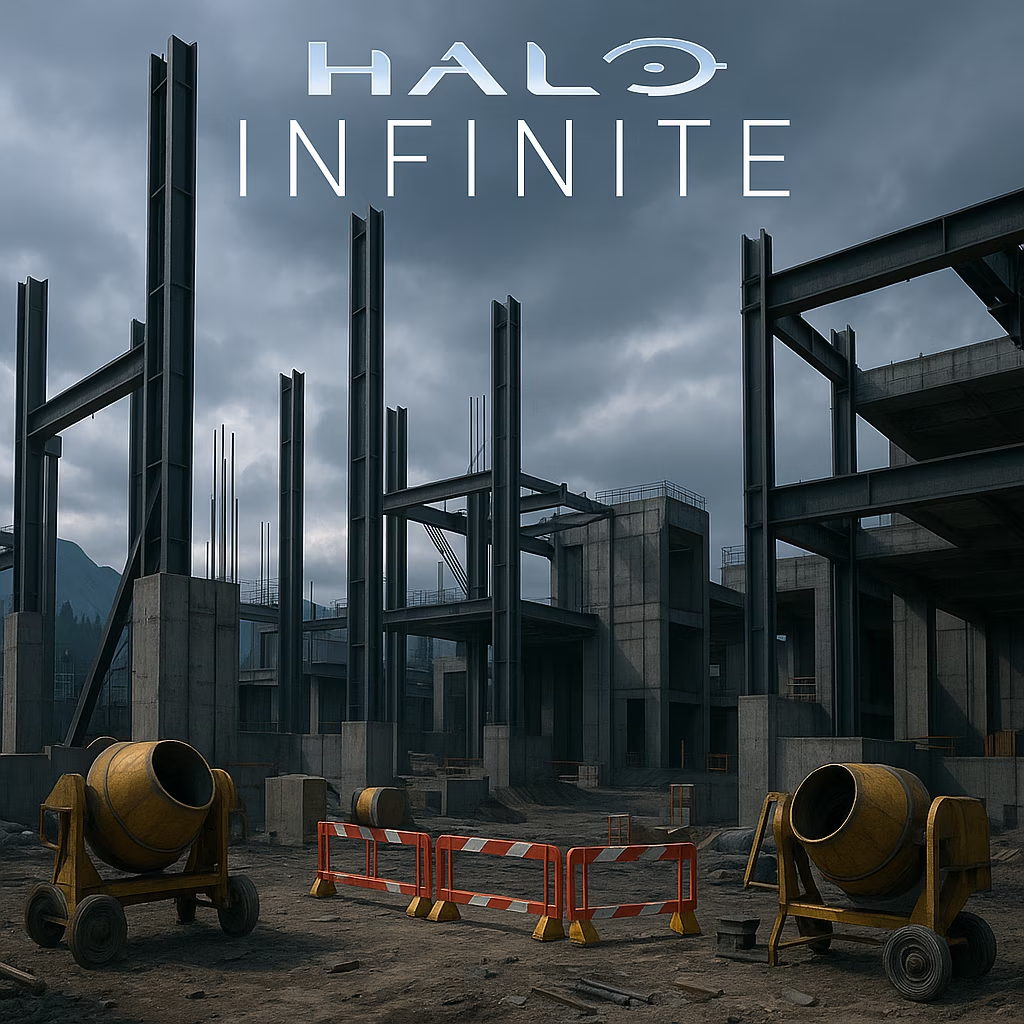
Halo Infinite, released in December 2021 after multiple high-profile delays, became a symbol of missed potential. The live-service model stumbled, and promised features dissolved. Most heartbreaking was the cancellation of the cooperative campaign mode in September 2022, a feature that had been a franchise staple. An image of a glitch from that canceled mode, circulated by players, became a silent monument to what could have been.
 .jpg)
.jpg)
Fans watched as the co-op campaign, once a beacon of camaraderie, was scrapped. The decision felt like a star going supernova — blindingly disappointing and leaving a void that no amount of free multiplayer updates could fill. Trust eroded, and player counts dwindled. Despite 343's continued support and the eventual delivery of new seasons, the sense of betrayal lingered like a stubborn stain.
Fast forward to 2026, and the industry has changed dramatically. 343 Industries has weathered the storm, now a leaner studio that gradually released Forge mode, battle royale elements, and a narrative expansion that attempted to stitch the wounds. However, the shadow of 2023 still looms. The question remains: can Halo ever reclaim its throne? Or is it now a phoenix forever trapped in the ashes of mismanagement, flapping wings but never quite catching fire?
The company's leadership has since stabilized, but the scars of the mass firings are a constant reminder of the fragility of game development. Developers work under a sword of Damocles, knowing that even passion can't shield them from a spreadsheet. Yet the Halo fanbase, though weathered, remains devoted. They've seen their hero survive the Flood, the Covenant, and now corporate Vogon poetry.
Looking ahead, the next chapter, rumored to be a soft reboot of the series on Unreal Engine 5, might be the crucial test. If 343 can deliver a game that marries nostalgia with innovation — while shedding the baggage of Infinite's troubled launch — the franchise could rise again like a well-forged Spartan shield. But if the same structural issues persist, the legacy will be less of a triumphant anthem and more of a mournful chant.
Ultimately, the tale of Halo is as much about corporate survival as it is about interstellar war. 343's vow that "Halo and Master Chief are here to stay" is a bold frontier statement, but in the volatile gaming cosmos of 2026, a statement is only as strong as the next update. The community watches, monitors aglow, hoping that the light at the end of the tunnel isn't just a plasma grenade's flash.
As reported by Game Developer, the turbulence around long-running franchises like Halo often traces back to production realities—staffing volatility, toolchain shifts, and live-service pipeline demands that can amplify missteps after major layoffs. Framing 343’s post-Infinite course through that lens, the move toward a potential Unreal Engine 5 reboot reads less like a cosmetic reset and more like an attempt to de-risk content delivery, rebuild iteration speed, and restore player trust by shipping cohesive updates instead of promises.
Comments